GLIAG | STRATEGIC PETROLEUM INTELLIGENCE | GLIAG_ESSAY_2026_14
GLIAG | PETROLEUM & ENERGY INSIGHTS
THE CARBONATE PALEOHIGH CORRIDOR
A Strategic Correlation from Northeast Colombia through Perla and Falcón to the Bonaire Basin
Reconstructing Oligocene-Early Miocene carbonate factories, kitchens, migration fairways and the hidden exploration potential of the southern Caribbean
GLIAG STRATEGIC PETROLEUM INTELLIGENCE PLATFORM
Where Information Becomes Intelligence. Where Discoveries Become Strategy.
Converting bare headlines into deep strategic, added value.
Document Ref: GLIAG_ESSAY_2026_14_CarbonatePaleohighCorridor_Rev01
August 2026
Author: Drs. M.P.T. Chin-A-Lien, MBA, M.Sc., Ing. Geologist
Certified Professional Geologist Nr. 5201-1996 (AAPG)
Chartered European Geologist Nr. 92-1996 (EFG)
Energy Negotiator, June 2021 (AIEN)
Principal Founding Partner & Chief Architect, GLIAG N.V.
Golden Lane Investments Advisory Group | Zoetermeer/Delft & Paramaribo
www.petroleumenergyinsights.com
Executive thesis
The Oligocene-Early Miocene southern Caribbean was not occupied by one continuous carbonate platform. It was a tectonically segmented corridor of carbonate factories established on inherited basement and fault-block relief, separated by siliciclastic depocentres and marine kitchens. Northeast Colombia developed patch reefs and reef complexes on structural paleohighs; Perla formed a giant rhodalgal-larger-foraminiferal bank above antecedent relief; Falcón developed coeval carbonate ramps on the margins of an extensional basin; and the ABC blocks later preserved younger island-platform carbonates. The exploration implication for the Bonaire Basin is precise: the most prospective analogue to Perla may not be the exposed Seroe Domi Formation, but an older, drowned and buried carbonate generation on basin-margin and intra-basin highs, positioned updip from mature Oligocene-Miocene kitchens and sealed by younger marine mudstones.
| GLIAG judgement: Direct Perla duplication in the Bonaire Basin is unproven. A broader Paleohigh-Reef-Seal-Charge play family is geologically credible and should be tested first along the southern and southeastern Bonaire Basin margins, on buried structural saddles and on isolated basement highs adjacent to the deepest sedimentary kitchens. |
1. The regional carbonate family: related, but not identical
The principal error in regional correlation is to treat every Neogene limestone as a time-equivalent of Perla. Correlation must separate age, carbonate-factory type, tectonic position, diagenetic history and petroleum-system access. The systems form a family of related plays, not one formation extending unchanged from Colombia to Bonaire.
| System | Age | Carbonate type | Structural setting | Exploration meaning |
| Cicuco-El Difícil, Lower Magdalena Valley | Late Oligocene to earliest Miocene interval within the Ciénaga de Oro system; exact field-scale age requires micropalaeontological calibration | Patch reefs and reef complexes: framestone, bafflestone, rudstone, back-reef and fore-reef facies | Inherited NE-SW paleohighs; mixed carbonate-siliciclastic shelf | Strong analogue for localisation and combination trapping; weaker analogue for Perla-scale continuity |
| Perla, Gulf of Venezuela | Upper Oligocene-Lower Miocene, commonly Chattian-Aquitanian; broader Oligo-Miocene bank succession | Rhodalgal and larger-benthic-foraminiferal distally steepened ramp/bank; deepening-upward and drowning | Antecedent/basement high with synsedimentary fault influence | Regional reference case: giant gas accumulation, exceptional secondary porosity and effective charge-seal timing |
| San Luis-Churuguara, Falcón | Early Miocene, Aquitanian-Burdigalian | Coralline-algal, larger-foraminiferal and coral-bearing ramps; mixed carbonate-siliciclastic systems | Margins of Oligocene-Early Miocene extensional basin; later inversion | Best exposed age-and-facies analogue to Perla, but more aggradational and locally clastic-rich |
| Seroe Domi and related ABC carbonates | Predominantly Middle Miocene-Pliocene in exposed successions; locally older basal intervals may exist | Island platforms, reef margins, fore-reef debris, slopes, clinoforms, dolomite and karst | Volcanic/basement island blocks affected by uplift, tilting and repeated exposure | Excellent process and heterogeneity analogue; generally too young and too exposed for direct Perla equivalence |
| Buried Bonaire Basin carbonate hypothesis | Potential Oligocene-Early Miocene interval; presently unproven | Drowned banks, patch reefs, ramps, debris aprons and karstified unconformities | Basin-margin and intra-basin paleohighs adjacent to deep depocentres | Highest-value untested play: possible age/setting match plus access to local kitchens |
2. Reconstructing the carbonate-time regional setting
During the Late Oligocene-Early Miocene, northeast Colombia, Guajira, the Gulf of Venezuela, Falcón-La Vela and the proto-ABC/Bonaire corridor occupied a mobile plate-boundary province. Extension and transtension created depocentres, while inherited volcanic, crystalline and sedimentary highs remained shallow enough for carbonate production. This generated a recurring spatial association: carbonate banks on highs, organic-rich marine shale and marl in adjacent lows, and later regional mudstones draping both.
Northeast Colombia.
The Cicuco-El Difícil study demonstrates that carbonate factories were strongly localised on NE-SW structural paleohighs. Reef growth was discontinuous and interacted with siliciclastic input. This is a model of isolated sweet-spot islands rather than a blanket limestone.
Guajira-Gulf of Venezuela.
Perla represents the offshore end-member: a large carbonate bank on antecedent relief, with rhodalgal and larger-foraminiferal facies arranged in a distally steepened ramp and modified by deep-burial dissolution. Its giant gas charge proves that regional kitchens, migration pathways, seal and timing can align at exceptional scale.
Falcón-La Vela.
The Falcón Basin records an Oligocene-Early Miocene extensional or back-arc phase followed by Middle Miocene inversion. San Luis and Churuguara carbonates formed aggradational ramps along basin margins while deeper-water marine shale and marl accumulated basinward. These ramps are the strongest exposed analogues to Perla, but their architecture and clastic interaction differ.
ABC-Bonaire domain.
Aruba, Curaçao and Bonaire occupied neighbouring but structurally independent blocks. Their exposed Seroe Domi-type carbonates record younger island-platform development, progradation, slope reworking, dolomitisation and exposure. The missing exploration interval may lie offshore and beneath these younger platforms: an older Oligocene-Early Miocene carbonate generation formed before uplift and preserved in subsiding flanks or saddles.
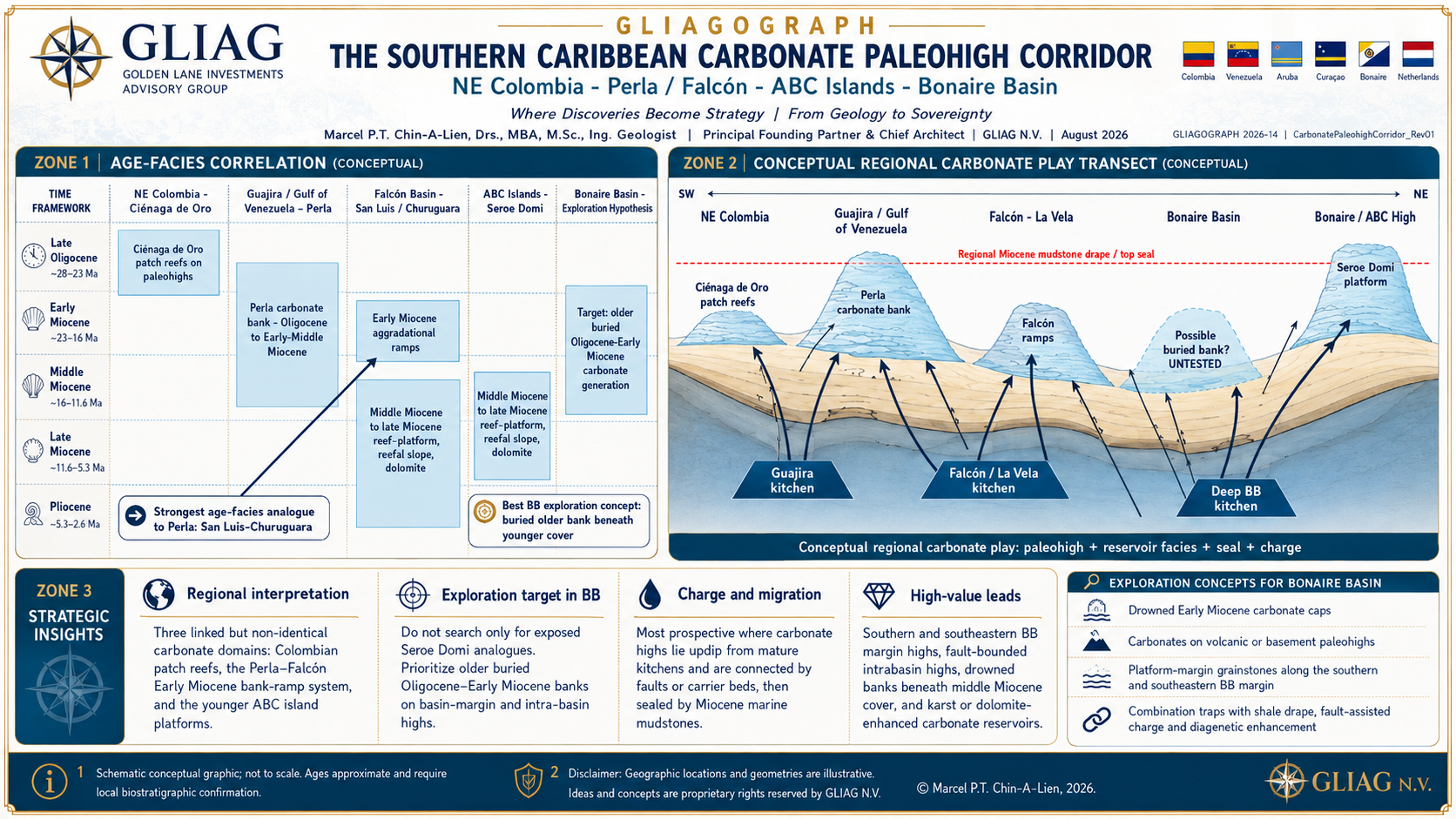
Figure 1. GLIAG conceptual age and facies correlation. The diagram distinguishes direct time-equivalence from process analogy; it is not a formal lithostratigraphic correlation chart.
3. Conceptual regional transect: highs, kitchens and charge
Figure 2. Conceptual carbonate-time and petroleum-systems transect from northeast Colombia through Perla-Falcón toward the Bonaire Basin and ABC highs. Schematic only; not to scale, not a measured plate reconstruction and not evidence of hydrocarbons.
The transect illustrates the central exploration relationship: the carbonate reservoir need not overlie its source. Perla-style accumulations can be charged laterally and vertically from adjacent deeper depocentres through carrier beds, unconformities and deep-rooted faults. The most favourable geometry is a carbonate bank positioned on the shoulder of a kitchen, rather than directly above the deepest and hottest basin centre.
4. Bonaire Basin exploration concepts
A. Southern and southeastern basin-margin banks – Highest-priority fairway. These sectors are closest paleogeographically to Falcón-La Vela and the Gulf of Venezuela carbonate-source-seal system. Search for Early Miocene mounds or flat-topped banks on basement steps, fault shoulders and structural saddles beneath younger shale drape.
B. Intra-basin paleohigh carbonate caps – Gravity and magnetic data may identify shallower basement blocks inside the basin. A carbonate cap on such relief could receive charge from kitchens on either flank. Risk centres on bank age, effective porosity and late fault breach.
C. Drowned platform margins and debris aprons – Perla and Seroe Domi analogues imply that platform margins may feed grain-rich aprons, rudstone bodies and gravity-flow reservoirs into adjacent deeper water. These may be more laterally extensive than the reef crest and can be sealed by basinal mudstones.
D. Karstified exposure surfaces beneath transgression – Middle Miocene inversion or relative sea-level fall may have exposed older banks. Subsequent marine flooding could create a high-quality karst reservoir beneath a regional top seal. Seismic recognition requires careful velocity modelling and distinction from volcanic relief.
E. Dolomitised fault-margin reservoirs – Fault-focused basinal fluids may enhance porosity by dissolution or dolomitisation, but the same faults can cement, compartmentalise or breach the reservoir. Fault chronology and fluid inclusion/isotope work are therefore essential.
F. Mixed biogenic-thermogenic gas systems – Shallow Neogene microbial gas may coexist with deeper thermogenic charge. Geochemical and pressure data must distinguish a superficial gas indication from a deeply charged commercial petroleum system.
5. Kitchen and migration logic
Three source end-members should be modelled without assuming that any one is present everywhere: (1) Oligocene-Early Miocene marine shale and marl comparable to Agua Clara/Pecaya-type intervals; (2) deeper Eocene-Oligocene restricted marine shale in syn-rift depocentres; and (3) locally inherited Upper Cretaceous marine source rocks where preserved and thermally viable. Miocene mixed Type II/III intervals and microbial gas may supplement these systems.
The critical charge test is temporal. Carbonate deposition must precede or overlap trap formation; regional shale burial must create top and lateral seal; source maturation must occur after effective trap closure; and faults must be transmissive during charge but sealing or inactive during preservation. Middle Miocene inversion could have improved closure and accelerated maturation, but it could also have breached earlier accumulations.
| Chance factor | Preliminary ranking | Reason |
| Reservoir presence | Moderate | Exposed ABC carbonates prove repeated carbonate factories, but Oligocene-Early Miocene equivalents offshore remain unproven. |
| Reservoir quality | Low-moderate | Primary facies may be favourable; commercial permeability depends on burial dissolution, dolomitisation, fractures and pore connectivity. |
| Source and maturity | Moderate in deep south/southeast; low elsewhere | Deep Bonaire Basin fill could generate hydrocarbons, but source richness, age and thermal history require calibration. |
| Migration access | Moderate | Faults and unconformities provide plausible pathways; charge direction and fault-seal behaviour remain unknown. |
| Seal | Moderate-high conceptually | Younger marine shale drape is plausible; continuity and capillary capacity must be demonstrated. |
| Trap preservation | Low-moderate | Long-lived strike-slip deformation, inversion and uplift create significant breach risk. |
6. How to explore the play
1. Build an Oligocene-Miocene seismic chronostratigraphic framework tied to every recoverable Aruba, Curaçao, Bonaire, Venezuelan and Colombian well and outcrop datum.
2. Acquire regional long-offset 2D seismic across the southern and southeastern Bonaire Basin, with ties to gravity, magnetics and the known ABC basement framework.
3. Use seismic geomorphology, spectral decomposition, curvature and impedance inversion to distinguish carbonate buildups from volcanic or crystalline highs.
4. Restore fault blocks and palaeobathymetry for Chattian, Aquitanian, Burdigalian and Middle Miocene time slices; carbonate potential depends on water depth at deposition, not present structure.
5. Construct 1D and 2D burial-history models for conservative, intermediate and deep-basin basement scenarios, calibrated to Falcón-La Vela and Perla analogues.
6. Risk each candidate separately for bank presence, reservoir connectivity, source maturity, migration timing, top/side seal and post-charge preservation.
7. Drill the first stratigraphic calibration well to test age, facies, source richness and pressure system rather than prematurely targeting the largest apparent closure.
7. Strategic conclusion
The regional evidence does not justify declaring a Perla field beneath the Bonaire Basin. It does justify a disciplined search for a Perla-related play family. The strongest exploration hypothesis is an older carbonate generation, deposited during Oligocene-Early Miocene extension on structural highs between Falcón-La Vela and the ABC blocks, subsequently drowned and sealed, and later charged from adjacent Bonaire Basin kitchens. The exposed Seroe Domi carbonates are invaluable analogues for platform geometry, slope processes, dolomitisation and heterogeneity, but they are not the principal target by default.
The decisive exploration move is therefore from surface analogy to subsurface petroleum-system proof: map the paleohigh, date the bank, demonstrate the kitchen, reconstruct migration, and test preservation. In GLIAG terms, the play is governed by the Paleohigh-Reef-Seal-Charge doctrine. Where all four coincide, the Bonaire Basin may contain a material carbonate gas opportunity; where one is absent, the same seismic mound may be only limestone, volcanic basement or water-bearing rock.
Disclaimer
This publication is an independent strategic geoscience interpretation prepared for general professional and investment-intelligence discussion. It is not a reserves or resources report, competent-person statement, securities recommendation, legal opinion, licence evaluation, navigation product or substitute for proprietary seismic, well, geochemical, engineering, commercial or regulatory due diligence. Regional maps, correlations and transects are conceptual, schematic, not to scale and may contain interpretive uncertainty. No discovery, petroleum system, reservoir continuity, source rock, migration pathway or commercial accumulation is claimed for the Bonaire Basin or ABC offshore areas unless explicitly identified as proven by cited public evidence.
Copyright, intellectual property and proprietary notice
Copyright © 2026 Marcel P.T. Chin-A-Lien and Golden Lane Investments Advisory Group (GLIAG N.V.). All rights reserved. The synthesis, regional correlation, Carbonate Paleohigh Corridor concept, Paleohigh-Reef-Seal-Charge doctrine, conceptual transect, exploration fairway ranking, kitchen-migration interpretation and associated strategic conclusions are original GLIAG intellectual property except where underlying third-party facts or ideas are expressly cited. No part may be copied, republished, adapted, translated, trained upon, incorporated into commercial studies, presentations, databases, bids, licence applications, investment memoranda or artificial-intelligence systems without prior written permission and full attribution. Citation of this publication does not transfer ownership or grant a licence to reproduce its proprietary analytical architecture. GLIAG expressly reserves all rights regarding text and data mining under Article 4(3) of Directive (EU) 2019/790 on Copyright in the Digital Single Market; this publication and its underlying data, analysis and proprietary architecture may not be used for the training of artificial intelligence or machine-learning systems without prior written permission.
About the author and GLIAG
Drs. M.P.T. Chin-A-Lien, MBA, M.Sc., Ing. Geologist, is Principal Founding Partner and Chief Architect of GLIAG N.V., a boutique Strategic Petroleum Intelligence platform integrating geology, petroleum systems, exploration, contracts, economics, capital architecture and sovereign development. GLIAG is rooted in Suriname and operates internationally from Paramaribo and Zoetermeer. Its guiding proposition is: Most people report discoveries. GLIAG interprets consequences.
Selected sources and directly clickable reference guide
• Osorio-Granada et al. (2026) – Integrated sedimentological, micropaleontological and structural data of Cicuco and El Difícil Miocene limestones – Core study demonstrating reef complexes localised on structural paleohighs and the importance of facies and multistage diagenesis.
• Pomar et al. – Oligocene-Miocene Carbonates of the Perla Field – AAPG depositional model and facies architecture for the giant Perla carbonate gas reservoir.
• Borromeo et al. – The Perla Gas Field: Geological Model of an Oligo-Miocene Carbonate Bank – Concise AAPG field description of basement-high control, rhodalgal-LBF facies, ramp architecture and reservoir quality.
• Valencia et al. (2020) – Deep-burial dissolution in the Perla reservoir – Shows that Perla reservoir quality is strongly modified by deep-burial dissolution and secondary pore connectivity.
• Albert-Villanueva et al. (2025) – Lower Miocene carbonate platforms of the Falcón Basin compared with Perla – Dates San Luis and Churuguara to the Aquitanian-Burdigalian and compares their aggradational ramps with retrogradational Perla.
• Albert-Villanueva et al. (2017) – Geology of the Falcón Basin – Regional geological map, cross-section and tectonostratigraphic reconstruction of an inverted Oligocene-Early Miocene basin.
• AAPG Memoir 123 – Subsurface Geology of the La Vela Basin – Offshore western Venezuelan calibration for Early Miocene carbonate and basement-hosted petroleum plays.
• GLIAG – Curaçao-Bonaire Basin: A Geological Treasure for Oil Exploration – GLIAG basin-scale synthesis of source candidates, reservoir families, structural traps, survey design and Perla-analogue ranking.
• GLIAG – Offshore Hydrocarbon Prospects: Aruba’s Untapped Resources – GLIAG reconstruction of the Falcón-La Vela-Paraguaná-ABC corridor, Perla time slice and offshore Aruba carbonate hypotheses.
• GLIAG – Understanding Oil and Gas Opportunities in Aruba and Curaçao – Regional comparison of the neighbouring but non-identical Aruba and Curaçao fault blocks and their exploration implications.
© 2026 Marcel P.T. Chin-A-Lien & GLIAG N.V. – Proprietary – www.petroleumenergyinsights.com