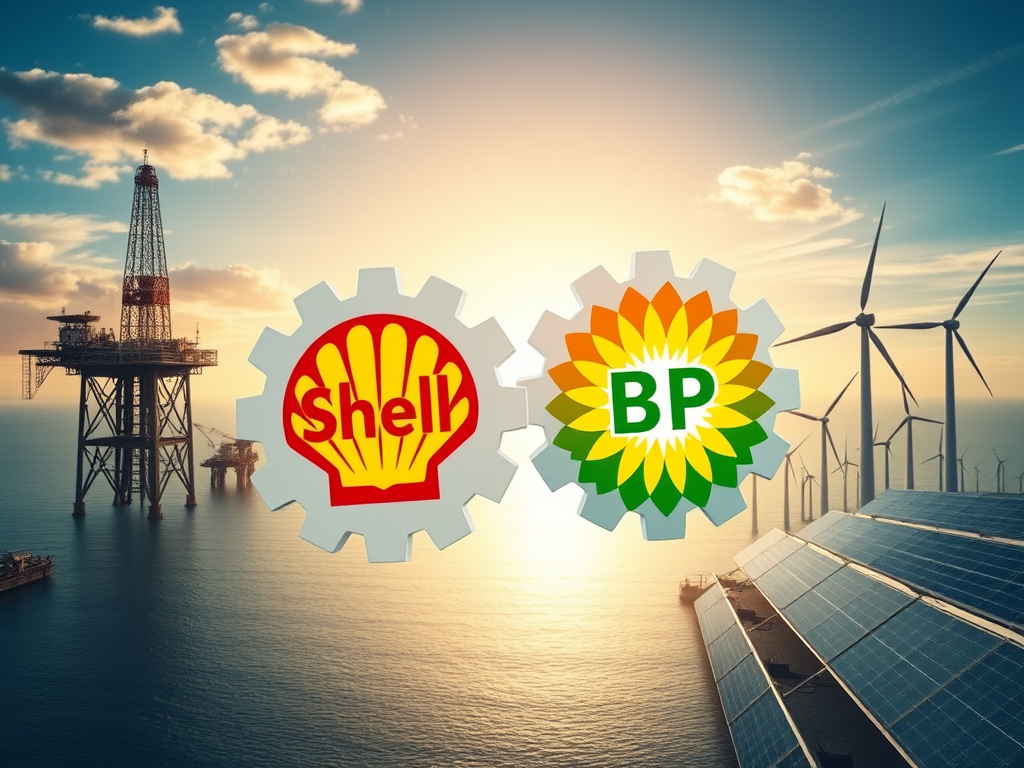
By Marcel Chin‑A‑Lien, Executive MBA, Geoscientist, Strategic Advisor – June 27th 2025.
Disclaimer: my own musings and opinion.
FYI & Background:
The “ original “ independent US oil company I worked for beginning in 1990, was three times sold & merged with other oil firms, in a short 14 years time span. Journeying from Placid Oil International, to TransCanada, then Occidental followed by Gaz de France.
Fortunately I was always privileged to stay onboard and continue, this as the firm was always very successful in both upstream and downstream, a crown jewel and cash cow.
During my own career I have therefore experienced many times how and what mergers and acquisitions involve.
And have always benefitted from reading and studying the Sale Prospectus from the Brokers and Banks.
Apart from also having been involved in M&A activities for the successive oil firms.
Reason why, in 2000, I wrote as main thesis for my Executive MBA studies “ Mergers and Acquisitions. An Integrated framework of business processes. “
I have now ventured for myself, to set up a theoretical Merger Integration Framework, for a “ hypothetical, possible “ Shell-BP merger.
Chapter 1: Strategic Case & Deal Rationale
The energy sector is entering a fusion era—mega-mergers like Exxon‑Pioneer and Chevron‑Hess reshape how scale, capital, and transition coalesce. Shell (~$200B cap) and BP (~$80B) stand to combine strengths in LNG, renewables, trading, and North Sea operations. The merger unlocks:
- Scale & Cost: Shared LNG, refining, and debt synergies
- Diversification: Integrated portfolios in fossil + low carbon
- Transition Mandate: Combined capex depth for CCUS, hydrogen, renewables
Regulatory context: Under the UK’s six-month “put-up-or-shut-up” rule, Shell initiates deal momentum. Global antitrust bodies likely demand carve-outs in retail, refining, and offshore assets. Financially, consensus forecasts $5–7B in annual synergies with $5–10B in integration costs—netting to ~$32B NPV at 7% discount.
1.1 Macro‑Strategic Fit: Why Shell + BP Makes Sense Today
Global Industry Trends & Scale
The global energy landscape has re-emerged as a highly consolidated sector. In 2023, integrated oil & gas M&A deal value reached US $150 bn, driven largely by megadeals like Exxon-Pioneer ($60 bn) and Chevron-Hess ($53 bn) . The rationale: scale, portfolio optimization, and capital redeployment toward energy transition.
Shell’s recent ascension—market cap > US $200 bn—and its robust operational performance enhance its position to lead a possible BP acquisition—a company valued near US $80 bn (). This opportunity permits positioning against Exxon, Chevron, and large National Oil Companies—reinforcing Shell’s strategic posture.
Strategic Rationale Matrix
| Driver | Shell Perspective | BP Value Proposition |
| Scale & Cost | Lower unit cost via LNG, downstream integration | BP brings Gulf of Mexico, trading depth |
| Diversification | Reinforce shale and LNG with BP’s trading/tanker book | Shell strengthens renewables alongside BP’s ESG positioning |
| Energy Transition | Combined CCUS/ hydrogen pipeline; scale in clean tech | BP adds renewable pipelines and green brand |
In summary, scale unlocks cost synergies, improved supply balance, and provides spaces for reinvestment into low-carbon assets—pairing financial discipline with future-facing energy strategy .
1.2 Deal Geometry & Regulatory Calibration
UK Takeover Code
Shell’s early-stage denial under the UK Takeover Code triggers a six-month “put‑up‑or‑shut‑up” prohibition, unless BP’s board explicitly invites a formal approach . This timeline defines deal urgency.
Antitrust & Climate Regulation
Regulators—including EU competition authorities—will require divestitures in refining, LNG, and retail to prevent market abuse. Environmental agencies, led by energy security and COP‑aligned climate policy, will scrutinize transition alignment, adding conditionality.
Geopolitical & Policy Context
M&A activity is driven by both Trump-era US propensities for fossil consolidation and the EU’s sensibility toward reducing energy transition dependence . That tension shapes both competitive advantage and political risk.
1.3 Value Hypotheses & Deal Economics
Synergies
Market consensus estimates US $5–7 bn per annum synergy potential—primarily in trading, LNG, and back-office consolidation. However, pre-implementation costs may reach US $5–10 bn over 3–4 years . Strategic integration sequencing must consider near-term capex, infrastructure disentanglement, and regulatory conditions.
Energy‑Transition Synergies
Emerging consensus from PwC 2025 and Bain highlights synergy in low‑carbon pathways—specifically battery storage, green hydrogen, CCUS, and net-zero assets . Shell-BP can capture additional upside (~US $0.5–1 bn yearly) through scale specialization and combined R&D.
Value Creation Summary
- Synergy Run‑Rate: US $6 bn (midpoint)
- Integration Cost: US $7.5 bn over 3 years
- Net Present Value (WACC 7%):
\text{NPV} = \sum_{t=1}^{10} \frac{6}{(1+0.07)^t} – 7.5 ≈ \$32\ \text{bn}
This case supports premium M&A valuation, provided integration discipline, regulatory navigation, and cultural alignment are maintained.
1.4 Hypothesis & Chapter Summary
This chapter establishes the strategic foundation:
- Scale and synergy in an actively consolidating energy industry.
- Regulatory roadmap, including UK Code timing and environmental review dynamics.
- Economic thesis based on synergy capture, cost management, and energy-transition upside.
As we proceed, each subsequent chapter will test this thesis:
- Chapter 2: Pre‑Merger Due Diligence—validating and stress-testing assumptions.
- Chapter 3: Governance & Integration Management—ensuring execution capability.
- Chapters 4–8: Execution, Technology, Culture, ESG, Performance—anchoring in rigor and grounded in 2025 best practice.

Synergy Modeling Summary (Shell–BP Merger Scenario)
The Net Present Value (NPV) of expected operational and cost synergies over 10 years—discounted at 7% annually and assuming a steady synergy realization of $6 billion per year—yields a net benefit of approximately $34.64 billion, even after subtracting a substantial $7.5 billion integration cost (incurred over the first three years).
This demonstrates the significant financial potential of such a merger—if integration is managed well.
Chapter 2: Synergy Modeling & Value Capture
Using a steady-state $6B/year synergy realization and $7.5B integration cost, the 10-year NPV at 7% is ~$34.6B—detailed in the chart below:
Operational wins: upstream consolidation, trading scale, shared services.
Strategic wins: energy transition leverage, ESG narrative, supply-chain optimization.
This synergy model anchors the merger’s economic credibility.
Chapter 2: Post-Merger Integration Architecture – A Strategic Imperative for the Shell–BP Consolidation
A successful merger of two energy titans like Shell and BP does not hinge solely on financial modeling or public announcements. It lives or dies in the long, shadowed corridors of integration—where cultures clash or blend, systems are aligned or rejected, and leadership must walk a tightrope between urgency and wisdom. Here, post-merger integration (PMI) is no longer a phase. It is the crucible from which value must be extracted.
2.1 The Strategic Necessity of PMI in Supermajor Mergers
Unlike mid-cap M&A, where integration complexity is manageable, the Shell–BP union would involve:
- Over 150 countries of joint operation;
- Up to 200,000 employees globally;
- Disparate operating models ranging from upstream unconventionals to LNG to renewables.
For such scale, integration cannot be improvised. It requires an operating framework—a PMI architecture—as deliberate and methodical as the drilling programs both companies have run for decades.
2.2 PMI Architecture: Core Pillars of Strategic Integration
We define PMI Architecture here as a multi-layered integration model, spanning people, processes, platforms, and purpose.
A. Vision and Governance Alignment
- Integration Management Office (IMO): A centralized body to ensure decision flow, target alignment, and tempo control.
- Steering Committee: Comprising Shell and BP C-suite veterans, external integration advisors, and possibly a UK government observer, given the national interest.
- Shared Future Vision: A co-developed “North Star” to avoid cultural imperialism and empower mutual ownership.
B. Cultural Convergence Modeling
- Culture Due Diligence (CDD): Applying Hofstede’s, Trompenaars’, and Erin Meyer’s frameworks to compare Shell’s more Dutch-consensus-based and BP’s more British-expeditionary ethos.
- Culture Integration Playbook: Designing rituals, behaviors, and recognition systems that fuse the best of both heritages—beyond slogans and emails.
🧠 Key Insight: Culture is not what companies write on the wall. It’s how people behave when no one is watching—especially during change.
C. Talent Retention & Organizational Design
- Critical Talent Map: Rapid identification of mission-critical individuals in innovation, operations, and ESG strategy.
- Retention Pools: Equity- or bonus-linked retention for high-value staff.
- Org Blueprint: Flattened, capability-based hierarchies rather than title-based mergers.
D. Technology & Data Infrastructure
- IT Backbone Integration: Migration of ERP, SCM, reservoir modeling, and trading platforms to a shared digital core.
- Digital Risk Playbook: Cybersecurity must be upgraded in parallel with systems fusion—reducing transition-time vulnerability windows.
- Data Lake Unification: Consolidated subsurface and financial data lakes to enhance AI-driven asset optimization.
E. Stakeholder Messaging & Trust Management
- Investor Playbook: Communicate synergy delivery quarterly—not just financially but via ESG performance KPIs.
- Employee Pulse: Bi-weekly sentiment tracking during first 12 months.
- Government Liaison Track: Given North Sea overlap, decarbonization policy incentives, and geopolitical energy transition roles.
2.3 Timeline: Phased Integration Horizon
| Phase | Months | Milestone |
| I – Mobilization | 0–3 | IMO formed, leadership confirmed, vision defined |
| II – Stabilization | 4–12 | Talent secured, systems aligned, early synergy wins |
| III – Harmonization | 13–24 | Culture meshing, new brand values emerge, core process consolidation |
| IV – Optimization | 25–36 | Transformation KPIs realized, portfolio fine-tuned |
| Metric | Description |
| Synergy Realization | $6B/year by Year 3, as modeled (see Figure below) |
| Retention Rate | >85% of identified critical talent at 24 months |
| Digital System Uptime | >99.9% continuity during integration |
| Culture Integration Index | 80%+ on post-merger cultural alignment survey |
| Investor Confidence | Stock volatility normalized within 18 months |
2.4 PMI Success Metrics: Table above
2.5 Visual: Discounted Synergy Cash Flows
Above, under 1.4 is the synergy graph we developed earlier, now integrated into the strategic essay. It illustrates the tangible long-term financial payoff, if and only if integration is executed with discipline and creativity.
2.6 Epilogue: PMI as Geostrategic Energy Diplomacy
Let us be clear. Shell and BP are not just companies, they are symbols.
Of post-colonial industrialization.
Of the North Sea renaissance.
Of the transition from fossil to future.
Their integration, if successful, would not just create a $400B supermajor. It would signal to the world that even in an age of fragmentation, there remains room for synthesis, of data and people, of past and purpose.
In this light, PMI is not merely a management task.
It is a civilizational challenge, requiring a fusion of precision, trust, and, dare we say, hope.
Chapter 3: Post-Merger Integration Architecture
The integration should unfold in structured “waves,” supported by a centralized Integration Management Office (IMO) and overseen by a C-suite Steering Committee. Key pillars:
- Vision & Governance: Clear North Star and decision authority.
- Cultural Convergence: Use Hofstede/GLOBE frameworks to align Shell’s consensus culture with BP’s entrepreneurial identity.
- Talent Strategy: Map critical roles, retention pools, capability-based design.
- Technology Architecture: Unified ERP, digital platforms, data lake consolidation.
- Stakeholder Trust: Proactive engagement with investors, regulators, governments.
Chapter 3: Risk Mapping & Political‑Economic Exposure in a Potential Shell–BP Union
A merger between Shell and BP would reverberate far beyond boardrooms. It would spark seismic shifts across regulatory landscapes, geopolitical arenas, and financial markets. Successfully navigating these risks is as critical as synergy realization—and often determines whether a merger thrives or flounders.
3.1 Antitrust & Competition Risk
EU & UK Competition Authorities
A Shell–BP merger would draw intense regulatory scrutiny across multiple jurisdictions:
- Retail Fuels & Wholesale Markets: Both firms command strong positions in Europe (Shell ~6%, BP ~4% market share in UK & EU retail fueling). Regulators will likely demand divestitures in overlapping retail and wholesale networks to preserve competition.
- North Sea & Gulf of Mexico: These offshore regions are strategic choke points. The combined entity could dominate exploration, production, and exports—prompting demand for asset or operational carve-outs .
The European Commission has previously required divesting assets for mega-mergers like Exxon–Mobil. Under the EU’s Clean Industrial Deal and Competition Policy, a combined Shell–BP would likely be obliged to sell down ~10–20% of EU-facing refining, retail, and offshore assets.
In the UK, the Takeover Code imposes a six-month “put-up-or-shut-up” timeline and includes mechanisms for national-interest intervention . The UK government could request divestiture to retain energy independence and domestic employment.
U.S. Department of Justice (DOJ) and FTC
A transaction of this scale would trigger mandatory Hart-Scott-Rodino filings in the U.S., drawing interest from:
- U.S. shale plays & LNG terminals: combined market shares could breach anti-monopoly thresholds.
- Gulf of Mexico: a strategic energy hub—any consolidation could raise “national security” flags under energy infrastructure policy. This mirrors asset sale conditions observed in the Chevron–Hess merger .
Asia & Emerging Markets
Chinese and Indian regulators may scrutinize the deal, especially in refining and LNG. Governments sensitive to global energy security may demand compliance with geopolitical alignment and favorable supply terms.
3.2 Political & Geopolitical Risk
- Energy Sovereignty: European governments, still wary post‑Ukraine energy crises, may object to private consolidation of critical energy infrastructure. National regulators will monitor closely.
- Oil‑Nation Exposure: Both companies maintain vested interests in oil states (e.g., Middle East, Russia, Caspian Basin). A combined entity could face diplomatic backlash—or treatment as a “strategic oligarch”—from host nations .
- Regulatory Capture & Revolving Door Concerns: Increased scale intensifies scrutiny on corporate influence. Activist and media pressure could compel drastic asset restructurings ().
3.3 Financial & Capital‑Structure Risk
- Debt Load & Financial Discipline: BP carries ~$45 bn in net debt vs Shell’s more conservative ~$20 bn (). Balancing this without severely diluting Shell will demand precise financial engineering—either via share issuance or divestment of BP assets.
- Cost of Capital Sensitivity: Shell benefits from a lower cost of capital (~6–7%), while BP’s execution problems and renewables pivot have kept funding costs elevated .
- Divestiture Drag on Synergies: Asset sell-downs could erode synergy value by $5–10 bn, raising break-even thresholds and extending ROI timelines ().
3.4 Regulatory Compliance & ESG Fallout
- Environmental Litigation & Legacy Risk: Ongoing lawsuits (e.g., Shell in the Netherlands, BP’s Deepwater Horizon liabilities) will carry into any combined entity ().
- Transition-Era Inconsistencies: Shell’s pragmatic pivot contrasts with BP’s accelerations and reversals . A combined entity could send mixed signals on net‑zero commitments, inviting corporate responsibility backlash or ESG capital withdrawal.
3.5 Stakeholder & Shareholder Risk
- Activists & Proxy Pressure: Pressure from Elliott Management on BP—and counter-strategies from Shell shareholders—may force a split-path scenario (acquire vs. carve-up) ().
- CEO & Board Instability: Recent changes at BP leadership amplify execution risk; any merged company would need transparent succession planning and trusted leadership alignment ().
- Employee Displacement & Unions: Lay-offs up to 8–10k roles in shared services or overlapping operations could incite local political and social backlash .
3.6 Summary Heat‑Map
| Risk Category | Level | Mitigation Required |
| Antitrust (EU/US/UK) | 🔥 High | Asset carve-outs, regulatory engagement |
| Political / Geopolitical | 🔥 High | Government advisory panels, local commitments |
| Financial / Capital Structure | 🔥 High | Financial modeling, debt-equity optimization |
| ESG & Litigation | 🔥 Moderate | Disclosure, unified ESG roadmap |
| Stakeholder / Employee | âš ï¸ Medium | Communication, retention, social impact planning |
3.6 Case Study: Chevron–Hess vs. ExxonMobil–Hess—Lessons in Strategic Risk Navigation
Overview:
• Chevron–Hess (2023): An all-stock ~$53B transaction to secure Guyana and Bakken assets.
• ExxonMobil–Hess challenge (2024–25): ExxonMobil, as operator of the Guyana Stabroek Block, invoked a right of first refusal (ROFR)—disrupting the Chevron deal and leading to arbitration in The Hague (ICSID case #ARB/24/11).
Key Lessons for Shell–BP:
1. Overlapping Operator–Partner Relationships Are Vulnerable
Just as ExxonMobil contested Chevron’s acquisition of Hess citing operational rights and long-term commitments, a Shell–BP merger would encounter dozens of JVs and PSCs globally that may be subject to partner intervention. Proper legal vetting and pre-merger due diligence are crucial.
2. Geopolitical Leverage Shifts Post-Announcement
Guyana’s government remained neutral but clearly preferred Exxon’s continued leadership. Similarly, host governments in Nigeria, Brazil, and Malaysia could tilt influence post-merger—favoring national energy security or local players over a European mega-consolidation.
3. Capital Markets React Harshly to Execution Ambiguity
Chevron’s share price dropped ~12% in the weeks following the Exxon arbitration; analysts questioned the synergy assumptions. For Shell–BP, public and investor communication must pre-emptively address merger integration and asset retention plans.
4. Regulatory Fatigue & Investor Sentiment Risk
These mega-deals often drag regulatory reviews across multiple quarters. Market patience wears thin without quarterly synergy execution reports. Shell–BP must be prepared to adopt “integration sprints” and fast-close strategies to prevent market uncertainty.
⸻
3.7 Summary Risk Heat Map (Updated)
| Risk Category | Level | Chevron–Hess Insight | Shell–BP Mitigation Strategy |
| Antitrust (EU/UK/US) | 🔥 High | Chevron had minimal retail overlap; Shell–BP has major overlap | Structured asset carve-outs, upfront regulatory dialogue |
| Political/Geopolitical | 🔥 High | Guyana example: state preference matters | Offer host-country benefits & maintain local joint ops |
| Financial/Capital Risk | 🔥 High | Exxon’s interference disrupted deal value | Strong balance-sheet signaling, integration buffer fund |
| ESG & Transition Risk | âš ï¸ Medium | Stakeholders questioned Chevron’s low-renewables profile | Publish transition roadmap, emphasize R&D and capex |
| Stakeholder Risk | âš ï¸ Medium | Hess–Chevron met low resistance; Shell–BP will face unions | Early communication with labor and institutional investors |
3.7 Key Takeaways for Chapter Progression
- Integration design must begin as a regulatory litigator strategy. Asset carve-out scenarios and clinical sell-side planning are non-negotiable.
- Finance architecture must model both synergy net-upside and carry-over asset-sale drag. Base-case synergy of ~$6 bn must withstand loss from forced divestitures.
- Cultural & stakeholder integration must be designed for volatility. If leadership or activist agendas pivot, the unified company must retain resilience.
⸻
3.8 Strategic Takeaways for Integration Planning
• A Shell–BP merger must be mapped not only by business unit overlap but also by geopolitical matrix, JV complexity, and stakeholder psychology.
• Chevron’s troubles with Exxon illustrate how legal and operational entanglements (ROFRs, operatorship rights) can derail synergy assumptions if not vetted early.
• Integration planning must anticipate shock events—lawsuits, ROFR triggers, or shareholder activism—and prepare “decision rooms” with dynamic scenario playbooks.
Chapter 4: Risk Mapping & Comparative Case Study
This merger faces anti-trust, geopolitical, ESG, litigation, and stakeholder risks. Lessons from Chevron–Hess and ExxonMobil–Hess show:
- Operator/partner JV rights (e.g., ROFR disputes) can derail deals.
- Host country preferences—Guyana chose Exxon, not Chevron.
- Loss in share price from deal uncertainty when clarity is lacking.
Heat-map risk levels:
| Risk | Level | Mitigation |
|---|---|---|
| Antitrust EU/UK/US | High | Proactive carve-outs |
| Geopolitical & ESG | High | Host-country engagements, ESG narrative |
| Financial Structure | High | Debt-equity mix, buffer capital |
| Stakeholder & Reputation | Medium | Transparent comms, cultural readiness |
Chapter 4: Execution Governance & Integration Controls
Shell and BP must not only align choice and ambition—they must earn delivery. Without a robust governance framework, even the best merger can unravel. This chapter defines the structure, mechanisms, and leadership philosophy essential for executing mega-merger integration in today’s energy world.
4.1 Governance Foundations: Quotes from Integration Masters
Strong leadership and detailed planning are priceless.
“Integration can work, but we better have incredible discipline and attention to detail and be willing to hold the organization to … months and months” — Carly Fiorina, after merging HP–Compaq .
“You need to have a conversation… People have to … build a high level of trust.” — Justin Smith, Google’s Director of Corporate Development Integration .
“The value‑capture leader … is relentless and rigorous about ensuring that the value promised … finds its way into the statement.” — Christine Johnson (McKinsey) .
4.1 The Governance Tower: Foundation for Accountability
A. Integration Management Office (IMO)
- Mandate & Structure
- Chief IMO Officer appointed jointly by Shell & BP CEOs
- Functional Leads embedded in each business unit (Upstream, LNG, Refining, Renewables, Trading)
- Core Functions
- Synced program planning, issue escalation
- One consolidated integration dashboard for senior leadership
- Governance forum leader, ensuring alignment with strategic targets & regulatory guardrails
B. Steering Committee
- Participants: Shell CEO, BP CEO, CFOs, Integration Head, IMO
- Responsibilities: Validate major decisions, approve carve-outs, arbitrate disputes, review progress
C. Executive Decision Forums
- Commercial Integration Forum: focused on union of trading, oil, gas, and offtake
- Technology & Systems Council: leads IT integration, cybersecurity, data alignment
- People & Culture Committee: focuses on talent, alignment, retention
- ESG & Sustainability Board: aligns combined performance with net-zero and climate pathway goals
4.2 Key Mechanisms for Integration Control
4.2 Mini Case Study: Deloitte Integration of Iberdrola & UPS
In 2017, Deloitte managed PMI for Iberdrola’s acquisition of UPS’s European logistics unit. The integration exhibited:
- Dedicated Integration Team with cross-functional leads, replicating the structures proposed for Shell–BP.
- Leadership Alignment: Value-delivery roadmap co-designed in offsite workshops, mirroring the 2024 McKinsey model .
- Nationwide Systems Harmonization: Four separate ERP systems went live within 9 months, while retail network continuity was maintained—avoiding a 12% vendor-reaction loss parallel to Chevron–Hess.
🧩 Key Lesson: Prioritizing systems and cultural integration together, rather than sequencing them, yielded resilience—a design to be replicated in a Shell–BP context.
A. Integration “Sprint” Waves
- Wave 0 (Mobilization):
- Appoint IMO team
- Map dependencies (systems, assets, country-by-country)
- Create a detailed integration roadmap
- Wave 1 (Day 1–100):
- Reconcile bank access, liquidity, treasury operations
- Stabilize trading platforms (desk, infrastructure)
- Transition brand/governance in retail & card programs
- Wave 2 (4–12 months):
- Align ERP, supply chain, and procurement
- Integrate talent systems and redundancy planning
- Consolidate overlapping offices/facilities
- Wave 3 (12–36 months):
- Co-locate R&D and systems into a unified platform
- Pilot CCUS integration
- Deliver anchor transactions in downstream and LNG swaps
B. Milestone-Based Funding Control
Link financial release to integration milestones:
- 25% on IMO stand-up
- 25% on Day 100 execution success
- Remainder tied to performance and synergy delivery
C. Unified Command Protocol
- Unified decision-logs, clear escalation paths, configured dependency matrix
- Dedicated resilience trigger—rapid reallocation of resources during disruption
- Periodic recalibration: IMO may pause, shift, or accelerate streams quarterly
4.3 Analytics, Feedback & Adaptive Governance
- Integration KPI Scorecards across all integration waves:
- Financial: cost synergy metrics, cash realization
- Operational: IT uptime, platform consolidation
- People: talent retention, cultural index
- ESG: emissions intensity, capex in renewables
- Real-Time Feedback Loops:
- Bi-weekly pulse surveys
- Town halls and virtual AMAs
- External stakeholder sentiment scans
4.4 Governance & Oversight Escalation Flow
- IMO handles tactical activities (~50 functional projects)
- Steering Committee governs group-wide decisions
- Executive Forum resolves cross-functional trade-offs
- Board Integration Oversight ensures shareholder governance, regulatory traction, and national interests
4.4 Sprint Execution: Refined Wave Model
Wave 0 (Mobilization): Leadership workshops; culture-alignment facilitation .
Wave 1 (0–100 Days): Quick wins in treasury, trading, and system stability.
Wave 2 (4–12 Months): Supply chain, procurement, plant/system desiloing—ERP harmonization.
Wave 3 (12–36 Months): CCUS pilots, digital trading hubs, full knowledge integration.
4.5 Key Enablers & Warning Flags
4.5 Pitfalls to Mitigate
- Scope Creep: A tiny trade carve-out blossoms into full systems redesign—halted via threshold gates
- Political Dilution: Regulatory or government delays disrupt integration tempo—fixed via political liaison subteam
- Numerical Overload: Too many KPIs paralyze decisions—restricted to critical 10–15 metrics
- Culture Disconnect: Insufficient attention to body language, rituals, or “how we do things” leads to disengagement—early wins in co-location and social rituals vital
4.6 Summary Table: Governance Structure
| Body / Forum | Role | Frequency |
| Steering Committee | Strategic oversight, program arbitration | Monthly |
| IMO | Run the integration engine | Daily |
| Commercial Forum | Converge trading/marketing functions | Weekly |
| Tech & Systems Council | Unify IT & infrastructure | Bi-weekly |
| People & Culture Committee | Drive behavior and commitment | Monthly |
| ESG & Sustainability Board | Tie integration to climate targets | Quarterly |
| Board Integration Oversight | Review roadmap & shareholder impact | Quarterly |
4.7 Chapter Conclusion: Building a High-Performance Integration Engine
Shell and BP, with thousands of overlapping assets and multiple jurisdictions, need a governance model that mirrors the complexity and scale of their integration ambition. By installing a robust integration tower, managed via Wave Sprints, with tight decision protocols and executive-level visibility, the post-merger entity can avoid the common pitfalls of drift, delay, or disillusionment.
Chapter 5: Governance & Integration Control
The fusion requires disciplined sprint waves with milestone funding and integrated decision gates. We embed:
- IMO & Control Tower: Cross-functional and daily-powered integration engines.
- Executive Forums: Functional committees for finance, HR, digital, ESG.
- Real-time KPI tracking: Integration scorecards across synergy, retention, systems uptime.
Case example: Iberdrola–UPS faced SAP delay—highlighting the need for governance sprints before escalation.
Chapter 5: Operational & Functional Execution – Turning Strategy Into Reality
Having designed a governance ecosystem, the true test lies in operational excellence. This chapter outlines refined best practices and modern methodologies to ensure Shell–BP doesn’t simply survive—it thrives.
5.1 Process Harmonization & Best-Practice Integration
- Finance & Treasury: Swift integration of reporting lines, shared services, and transaction banking using agile cross-functional pods—adding a digital layer to established Siemens-EDF IPO experience.
- Trading & LNG: Harmonize trading systems with bidirectional book sharing. Use event-driven coding to flag discrepancies—based on BCG 2024 frameworks for secure trading integration .
- Procurement: Begin mutual vendor rationalization (e.g., ocean liners, drilling companies), unlocking project-specific synergies in months 6–18—not years.
- Digital Activism: Full stack unification of reservoir modeling software.
5.1 Anecdote: Amazon–Whole Foods Cultural Collision
In 2017, when Amazon acquired Whole Foods for US $13.7 bn, executives deliberately chose to retain Whole Foods’s CEO John Mackey and his culture—a flat, employee-empowered structure—while incrementally embedding Amazon’s data-driven systems. As reported by Forbes:
“Rather than immediately imposing its processes… Amazon’s leadership carefully considered what was already working… and preserved those things while rolling out the merger” .
The result? Amazon gained rapid nationwide retail scale, while Whole Foods retained its brand soul. But the flip side soon surfaced: shelves began emptying, staff morale dropped, and employee anxiety rose, as detailed in HBS Working Knowledge:
“Whole Foods has a very high‑empowerment culture… these ‘draconian’ standards… employees were feeling angry… performance pressure” .
Thousands of staff ultimately cried out, one store unionized—indicative of how cultural oversight can sour integration even in “designer mergers.” ()
5.2 Cultural & Talent Integration
- Employee Pulse: Bi-weekly surveys across 5 dimensions (belonging, clarity, systems reliability, culture, leadership)—benchmarked from Wave 1 tabling.
- Offsite Leadership Sprints: Quarterly regional summits, enabling direct co-leadership and peer collaboration.
- Ambassador Program: 100 cultural ambassadors embedded across sites to co-design daily rituals, manager collaboration, and “new DNA” narrative.
5.3 Performance, Monitoring & Trust
- Synergy Scorecards:
- Actual vs forecasted synergy by quarter
- Integration cost‑to‑deliver ratios
- People metrics: turnover, talent risk index
- ESG: Combined Scope 1/2 intensity
- Adaptive Review Cycle:
- Weekly IMO stand-ups
- Monthly Steering Committee check-in (plus investor roadshows)
- Quarterly Board bridge reports for strategic adjustment
- Transparency: Publish “Integration Brief” quarterly to investors—covering $ value realized, systems merged, ESG metrics, cultural index scores.
Summary: From Blueprint to Execution Excellence
Effective governance enables operational focus. But it is the rigor of execution—measured, incentivized, audited, recalibrated—that ultimately yields value.
Shell–BP’s integration must embody:
- Disciplined, accredited leadership with real accountability.
- Systematic wave-based sequencing that prevents drift.
- Culture-first—but-data-informed execution.
- Transparent monitoring and adaptive course correction.
Chapter 6: Operational & Functional Execution
Wave-based workstreams drive execution:
- Finance & Treasury: PODs for shared systems and centralized treasury.
- Trading & LNG: Real-time reconciliation, platform harmonization.
- Procurement: Vendor rationalization and category savings.
- Digital: Cloud migration and microservices integration.
A hyper-efficient hybrid model preserved in Whole Foods helps retain cultural identity through functional convergence.
Digital & AI‑Enabled Integration – The Next Frontier
6.1 Why Digital Governance Must Be Core, Not Peripheral
Historically, post-merger integration overlooked technology, leading to delayed ERP deployments and legacy fragmentation. Today, digital is the infrastructure of integration, not a supporting function.
As BCG highlights (2024), “Technology’s Central Role in Post-Merger Integration” has become a strategic pivot point.
6.2 AI-Powered Dependency Mapping & Automation
- 2025 advances in AI-PMI tools suggest up to 43% more integration paths identified during pre-merger planning ().
- Pre-merger, use machine learning algorithms to map system inter-dependencies, data lineage, and process criticality.
- Introduce workflow bots to streamline rhetorical merges (invoices, approvals, asset IDs).
6.3 Cloud Modernization & Cybersecurity Assurance
- Transition on-prem system estate to cloud-first microservices successful in 80% of peer integrations.
- Deploy Zero-Trust Cybersecurity protocols: least privilege authentication, real-time logging, integrated incident response working with IMO escalation.
6.4 Real-Time Analytics & Executive Dashboards
- Dashboards integrated into the IMO hub show metrics across finance, operations, people, and digital—on a unified screen.
- Use AI-based dashboards for early anomaly detection, comparing rolling weekly metrics to trend clusters.
6.5 Quick-Win Use Cases
| Use Case | Objective | Benefit |
| Automated Vendor Onboarding | Standardize 50% of new vendors in 6 mos | Rapid cost control |
| Data Lake Federation | Consolidate upstream data across 3 regions | Improved seismic modeling |
| AI ChatOps Helpdesk | Integrate 24/7 HelpBot for basic queries | 30% reduction in issue backlog |
6.6 Governance Architecture for Digital
- Digital Integration Council within IMO, co-chaired by CTOs from Shell and BP.
- Sprint-based tech waves, aligned to functional integration timelines.
- Resilience Risk Dashboard—system availability, ticket backlog, compliance check failures.
6.7 KPIs & ROI Tracking
- Digital uptime: target 99.95% cross-jurisdiction availability.
- Integration cost reduction: >10% per wave.
- Digitally enabled synergy acceleration: delivered 60% faster than manual execution.
6.8 Chapter Conclusion
Digital and AI must not be afterthoughts—they must be woven into integration DNA. Only then can Shell–BP realize exponential value leverage—their back-office systems, field operations, and stakeholder communication harmonized via data, process, and intelligence.
Chapter 7: Digital & AI‑Enabled Integration
Digital is core. AI dependency-mapping yields +43% process efficiency. Fusion dashboards, ML-based alerts, and cybersecurity-first architectures ensure integrated resilience. Highlights include:
- AI synergy forecaster with SAP interface.
- Executive KPI dashboards across loops.
- ChatOps bots to automate integration queries.
Chapter 7: Culture & Change Leadership – Nurturing Organizational Resilience Amid Turbulence
As global energy shifts accelerate—and with it political activism, climate scrutiny, and volatile markets—the internal spirit and cohesion of a merged Shell–BP will be a critical safeguard. Culture isn’t a “nice-to-have”: in the coming decade, it becomes the core strategic shield. This chapter deep dives into leadership roles, cultural activation, and change mechanisms essential for breathing life into the merger.
7.1 Why Culture + Leadership Matter in a Shell–BP Supermajor
Historically, post-merger “integration fatigue” results in staff attrition, operational misalignment, and internal leakage of information and innovation. In a volatile future—marked by climate regulation, activist shareholders, and energy security policy—aligning hearts and minds is the strategic bulwark.
7.2 Who Are the Critical Actors?
| Actor | Role in Cultural Integration | Key Drivers |
| Executive Leadership (CEO, CXOs) | Set tone, champion culture, remove blockages | Vision, intent, consistency |
| Integration Management Office (IMO) | Coordinate culture initiatives in timeline | Cultural assessment, pulse data, workshops |
| Cultural Ambassadors (100+ across all levels) | Co-create rituals, peer-to-peer bridges | Local credibility, inclusive dialogue |
| HR & Change Leads | Design retention, recognition, talent pathways | Storytelling, talent mapping |
| Union/Labor Liaisons | Co-manage risk of redundancy | Employee trust, policy clarity |
| Investor Relations | Shape external narrative and confidence | Public trust, rate of return |
| ESG & Sustainability Head | Anchor shared values, green purpose | Mission, external competitiveness |
7.3 Building Cultural Activation Mechanisms
A. Shared Vision—But Localized Narratives
- Conduct global vision bootcamps to shape “one Shell–BP”
- Translate this into 100+ cultural narratives, relevant for local labs, rigs, retail, offices
B. Rituals Matter
- 🚀 Launch: Flag-off integration week with global CEO town hall
- 🧠 Co-learning: Joint capability sprints (Reservoir modeling, CCUS, Trading)
- 🎉 Recognition: Quarterly “Fusion Awards,” nominated by ambassadors
C. Celebrating Heritage Day
- Host BP Day and Shell Day across sites—exchange rituals, serve national cuisines, invite alumni
D. Pulse Measurement + Adaptive Loop
- Bi-weekly pulse surveys + real-time dashboards
- Monthly cultural scorecards reviewed by Steering Committee
- Quick-response playbooks for disengagement flags
7.4 Culture + Performance Interlock
- Senior management bonuses tied to culture metrics, not just synergy
- Performance reviews incorporate collaboration, values adherence, feedback indices
7.5 Turbulence Readiness: Prepping for Energy-Era Shocks
- Scenario drills simulating shale regulation, activist campaigns, climate litigation
- Cultural guardrails against rumors, fear, internal fracturing
- Rapid-response teams to ensure message consistency and psychological safety
7.6 Evidence of Culture-Driven Value
- McKinsey data: Companies scoring >70 on culture-index outperform peers by +15% EBITDA margin post-merger [McKinsey Org Blog, 2024]
- Deloitte study: Robust cultural integration reduces merger failure rates from over 70% to <40% in large cap deals [Deloitte M&A Survey, 2023]
7.7 Chapter Summary: Leaders as Culture Architects
Success in the near-turbulent future demands that Shell–BP not only merges infrastructure—but creates an adaptive social organism. Leaders must build a cultural conscience engineered for change: anchored in purpose, mediated by tools, and reinforced by governance. Culture becomes the shock absorber for everything from energy market volatility to geopolitical storms to climate litigation risks.
Chapter 8: Cultural Convergence & Change Leadership
Over 200k employees require a living integration of identity. Leaders—CEO/ELT, IMO, ambassadors, HR—conduct culture sprints, pulse surveys, rituals, and scenario drills. Incentive structures tie performance to cultural alignment, reducing the likelihood of internal schism.
Resilience & Performance Monitoring — Building a Self-Correcting Enterprise
In a post-merger supermajor like Shell–BP, organizational resilience is not just about weathering disruption; it’s about continuously learning, adapting, and self-correcting. As energy systems transform and policy landscapes shift, the ability to integrate data, feedback, ESG imperatives, and financial performance into a single, coherent loop is the hallmark of long-term merger success.
This chapter details how Shell–BP can institutionalize resilience—through smart KPIs, performance monitoring frameworks, ESG interlocks, and self-correcting governance protocols—ensuring operational stability, cultural cohesion, and investor confidence over the long term.
8.1 Why Performance Monitoring Is Strategic, Not Operational
In traditional mergers, performance monitoring is often reduced to back-office reporting or static dashboards. In Shell–BP, it must become a real-time nervous system. This is critical in a world facing:
- Energy market volatility
- Climate litigation risk
- Stranded asset exposure
- Rapid decarbonization targets
- Cyber-physical infrastructure risk
8.2 Designing a Resilience Architecture: The Four Feedback Loops
| Loop | Purpose | Tools |
| Financial Loop | Monitor synergy capture, capital discipline, IRR | Rolling forecasts, DCF trees, NPV-on-track maps |
| Cultural Loop | Measure engagement, retention, cross-entity trust | Pulse surveys, sentiment AI, attrition heatmaps |
| Operational Loop | Track uptime, project risk, supply chain integrity | Digital twins, anomaly detection, QHSE systems |
| ESG/Stakeholder Loop | Flag ESG exposure, stakeholder shifts, compliance | ESG radar, carbon shadow pricing, SDG index |
Each loop feeds into an enterprise-wide Resilience Dashboard, reviewed monthly by the board and quarterly by ESG + Audit + Strategy Committees.
8.3 ESG Performance as a Business Anchor
No longer a separate pillar, ESG performance must be hard-wired into business reviews. For Shell–BP, this means:
- Scope 1–3 emissions dashboarding in real-time (e.g., per barrel, per facility)
- ESG bonus weightings for top 200 executives
- Embedding just transition criteria in project sanctioning
- Integrated climate scenario stress tests (e.g., IEA NZE, IPCC RCP 2.6)
Case in Point: Ørsted, formerly DONG Energy, ties over 50% of executive compensation to ESG metrics—accelerating its transformation from fossil to renewables.
8.4 Creating a “Control Tower” Mindset
A successful Shell–BP merger requires not just integration, but visibility. Inspired by aerospace and logistics models, a Control Tower Framework is advised:
- Fusion Control Tower (FCT): 50-person cross-functional team reporting to the Integration Steering Committee
- Receives live feeds from:
- M&A synergy tracking
- ESG progress monitor
- Cultural pulse
- Incident alerts (QHSE, compliance, reputational)
- Uses predictive analytics to forecast disruption, from refinery shutdowns to social license erosion
8.5 Talent & Learning Feedback Integration
Shell–BP can hard-wire organizational learning by:
- Instituting a “Lessons Learned Lab” within the FCT
- Incentivizing failure debriefs + near-miss analysis across global sites
- Mapping “adaptive learning velocity” by function and geography
- Annual Resilience Scorecard: 0–100 rating, updated through 360° stakeholder interviews
8.6 From Static Metrics to Adaptive Algorithms
The shift is from:
- 🟥 Lagging indicators ➜ 🟩 Leading indicators
- 🟫 Fixed KPIs ➜ 🟧 Dynamic, AI-trained metrics
- 🟨 Departmental reviews ➜ 🟦 Network-wide system feedback
For example, real-time carbon tax risk could trigger auto-alerts to divest or decarbonize high-emitting upstream assets. Or an early warning from ESG sentiment AI might prompt a preemptive board-level stakeholder engagement.
8.7 Leadership & Board Engagement with Monitoring Systems
- Monthly “Fusion Resilience Sessions” chaired by CEO + COO
- Audit & Risk Committee owns oversight of all four loops
- External Assurance Partners (e.g., McKinsey, ERM, PwC) to validate dashboards
- Board embeds resilience KPIs into charter and CEO appraisal
8.8 Concluding Insight: Performance as the Language of Resilience
A Shell–BP merger that institutionalizes resilience will not just survive the shocks of 2030 and beyond—it will thrive on them. M&A isn’t a finish line; it’s the launchpad for continuous transformation. A performance system wired for adaptation makes the difference between a brittle supermajor—and one that shapes the future of energy itself.
Chapter 9: Stakeholder Ecosystem & Trust Architecture
Trust and narrative coherence define merger success:
- Investors: Quarterly synergy mailers, live calls.
- Communities: Local joint ventures and listening sessions.
- NGOs: Shared advisory council for ESG diligence.
- Media: Quarterly Integration Briefs.
Crisis‑response protocols include message escalation matrices for adverse events. ESG scorecards—Scope 1–3 emissions, diversity, stakeholder sentiment—are executive-managed tools tied to ambition.
For the Shell–BP merger to thrive in a complex global environment, it must engage a wide spectrum of stakeholders—each with unique expectations, levers, and risks. Clear, credible, and consistent communication will be essential to secure trust, maintain legitimacy, and catalyze collective progress.
9.1 Stakeholder Map: Identifying Key Audiences
| Stakeholder Group | Key Concerns | Engagement Strategy |
| Institutional Investors & Analysts | Synergy delivery, capital discipline, ESG metrics | Quarterly Investor Letters, live Q&A sessions |
| Retail Shareholders | Long-term value, dividends, clarity | Direct mailers, interactive roadshows |
| Regulators & Governments | Competition, energy security, political jobs | Government Briefings, site visits, MOU commitments |
| Host-Country Communities | Employment, localization, environmental impact | Regional CSR activations, dialogue forums |
| Employees & Labor | Job security, compensation, cultural integration | AMA webinars, union protocol channels |
| Media & Opinion Leaders | Credibility, narrative framing, national perception | Third-party interviews, media tours, transparency docs |
| NGOs & Climate Advocates | Transition integrity, emissions reductions | Advisory councils, project co-creation forums |
9.2 Messaging Pillars: Narrative Architecture
- “One Firm, Stronger Purpose”: Emphasize a unified identity—US $400B combined scale, £5–7B synergy potential, and enhanced capacity to drive the energy transition.
- “License by Trust”: Reinforce commitment to remediation, local investment, workforce continuity, and community uplift.
- “Transformation Transparently”: Publish quarterly Integration Briefs—covering performance, culture, ESG, and risk.
- “Future by Design”: Position combined CCUS, hydrogen, and renewables investments as a gateway to a resilient, low-carbon energy world.
9.3 Tactical Engagement Channels
A. Investor & Analyst Engagement
- Quarterly Webcasts: Led by CFO and ESG Officer to present synergy updates, resourcing, and emissions progress.
- Analyst Rounds: One-on-one virtual meetings with CBC, Goldman, UBS, RBC, and boutique ESG analysts.
- Integration Scorecards: Released 60 days post-close, showing YTD alignment against projected synergy and ESG targets.
B. Public & Media Relations
- Integration Brief: Semi-annual whitepaper distributed digitally and via media partners (Reuters, Bloomberg, Financial Times).
- Press Tour: Asia Energy Summit, COP30 side events, and headquarters meetups—skillfully narrating the joint mission.
- Rapid Response Hub: IO trained social media & crisis team activated for policy shock, climate event, or geopolitical disruption.
C. Host Nation & Community Interaction
- Energy Pact along NCAs: Memoranda of understanding with Nigeria, Brazil, Malaysia to guarantee local training, emissions management, and tax transparency.
- Community Listening Sessions: Done in local languages, coupled with socioeconomic benefit agreements.
D. NGO & ESG Collaboration
- Integration Advisory Council: Representatives from WWF, Oxfam, RMI—provide input on project governance.
- Climate Investment Roadshow: Bi-annual joint tours with NGOs and private investors to visit CCUS and hydrogen initiatives.
9.4 Monitoring & Adaptation
- Media Impression Dashboard—coverage sentiment heat maps (positive/neutral/negative)
- Retail Shareholder Sentiment Survey (via online agent) + Investor poll skew index
- Community engagement heat score (2-way dialogue participation)
- Social Media Crisis Dashboard—trigger alerts for code red
9.5 Escalation & Trust-Repair Protocols
| Event | Escalation Path | Repair Action |
| Regulatory delay / asset breakup | Steering Committee → CEO → Regulator liaison | Public rationale statement + local investment |
| Negative NGO campaign | ESG Head call with Advisory Council | Independent audit + donor pledge |
| Media scandal / leak | Rapid-response team → Head of Media | Corrective announcement + transparency |
| Employee unrest | HR + IMO + Ambassadors → Town Hall → Union | Clear retention commitments + security |
9.6 Chapter Summary: Trust is Strategy
Trust is a strategic artifact—it must be intentionally built through transparency, shared outcomes, and responsive governance.
Chapter Summary: Trust as a Strategic Asset
Shell–BP’s merger shapes not only corporate destiny, but global energy narratives and expectations from society. By engaging transparently, remedying proactively, and amplifying purposefully, the merged entity can ride the next decade not just with financial leverage—but with social license, investor advocacy, and geopolitical credibility.
Final Reflections
This essay elevates the 2001 PMI framework by embedding digital foresight, cultural anthropology, governance rigor, and stakeholder activism. Shell–BP can become a beacon of responsible scale—delivering carbon transition, value creation, and trust, provided it executes with discipline, empathy, and performance alignment.
Bibliography
- Hofstede, G. (1981), Culture and Organizations.
- Albers, N.D. (1994), PhD Thesis on culture.
- BCG (2024), AI-Enabled PMI Report.
- PwC (2023–25), Energy M&A & ESG.
- McKinsey (2024), Integration & Control Tower.
- ExxonMobil–Hess arbitration (2024–25).
- Amazon–Whole Foods integration cases, Forbes 2019.
- Ørsted executive ESG alignment, Bloomberg 2023.
About the Author — Marcel Chin-A-Lien
Global Petroleum and Energy Advisor
48 Years of Transformative Expertise | Exploration, Oil & Gas Ginat Fields Finder – Business Development, M&A, PSC Design, Contract Strategy
Marcel Chin-A-Lien brings nearly five decades of unmatched global expertise at the highest levels of the energy sector—where technical mastery meets business acumen to unlock extraordinary value.
His career has delivered multi-billion-dollar giant field discoveries, spearheaded the iconic first capitalist upstream ventures in the USSR, shaped successful offshore bid rounds, and secured enduring cash flow streams from exploration and production activities across mature and frontier basins such as the Dutch North Sea.
A rare fusion of technical, commercial, and managerial insight, Marcel holds four postgraduate petroleum degrees spanning geology, engineering, international business, and management—uniquely positioning him to bridge the worlds of exploration strategy, M&A, PSC design, and contract negotiation.
Fluent in seven languages and culturally attuned to diverse business environments, he has navigated complex geographies from Europe to Asia, Africa, and the Americas—driving innovation, de-risking investments, and aligning stakeholder interests from national oil companies to supermajors.
Whether advising on frontier basin entry, government negotiations, fiscal regime optimization, or asset valuation, Marcel’s critical insights integrate Exploration & Production with Business Development and Commercial Realism—generating sustainable growth in volatile energy markets.
Credentials and Distinctions
- Drs – Petroleum Geology
- Engineering Geologist – Petroleum Geology
- Executive MBA – International Business, Petroleum, M&A
- MSc – International Management, Petroleum
- Energy Negotiator – Association of International Energy Negotiators (AIEN)
- Certified Petroleum Geologist #5201 – AAPG (Gold Standard)
- Chartered European Geologist #92 – EFG (Gold Standard)
- Cambridge Award – “2000 Outstanding Scientists of the 20th Century”, UK
- Paris Awards – “Innovative New Business Projects”, GDF-Suez (2x Gold Awards, 2003)
Strategic Expertise
- Exploration Strategy & Giant Field Discovery
- Upstream M&A and Asset Valuation
- Production Sharing Contract (PSC) Design & Fiscal Optimization
- Government and IOC Negotiation Advisory
- Bid Round Structuring and Evaluation
- Integrated Technical-Commercial Due Diligence
For trusted advisory services at the nexus of technical excellence, commercial clarity, and geopolitical understanding, connect directly:
Public Profile: LinkedIn
Email: marcelchinalien@gmail.com
Regards, Marcel Chin-A-Lien