Golden Lane in Suriname โ€“ The First Oil of Block 52 Fusaea-1 Golden Lane in Suriname The First Oil of Block 52 That I See in a Picture Fusaea-1 Exploration Well โ€” 16 May 2024 The Guyanaโ€“Suriname Basin has long been interpreted through seismic lines, maturation curves and petroleum system modelling. For decades, the Golden Lane concept represented a structural-stratigraphic fairway predicted to host Upper Cretaceous deepwater turbidite reservoirs charged by Lower and Upper Cretaceous oceanic anoxic event (OAE) source rocks. Then came a photograph. Two bottles of hydrocarbons from Fusaea-1 in Block 52 โ€” publicly released. For the first time, Surinameโ€™s offshore Golden Lane had visible oil. Embedded Conceptual 3D Geological Framework The following conceptual figure illustrates the petroleum system architecture of Block 52 within the Golden Lane fairway: Conceptual 3D model: Pre-Cretaceous basement, Lower Cretaceous OAE source kitchens, Upper Cretaceous turbidite fan reservoirs, structural migration pathways, and present-day phase distribution. 1. What We See in the Fusaea-1 Image Two hydrocarbon samples with density contrast One darker liquid phase One lighter, clearer hydrocarbon Phase separation likely due to pressure drop This visual evidence strongly indicates a light to volatile oil system or condensate-rich hydrocarbon phase. Heavy oil is inconsistent with the appearance. 2. Basin Context and Petroleum System Logic Source Rocks Aptianโ€“Albian (OAE 1) Cenomanianโ€“Turonian (OAE 2) Marine Type II kerogen High TOC (>3โ€“10% regionally reported) Maturity Deepwater burial >4โ€“6 km Late oil window to wet gas window Estimated Ro 0.9โ€“1.3% Reservoir Upper Cretaceous deepwater turbidite channels Good porosity preservation under overpressure High net-to-gross systems This maturity level predicts volatile oil or condensate transition fluids โ€” precisely consistent with the Fusaea image. 3. Fluid Phase Position on the Hydrocarbon Continuum Hydrocarbon phase evolution: Oil โ†’ Volatile Oil โ†’ Wet Gas โ†’ Condensate โ†’ Dry Gas The image suggests positioning near the volatile oilโ€“condensate boundary. Likely characteristics: API gravity 35โ€“50ยฐ Elevated GOR Solution gas flashing Strong mobility 4. Ranked Fluid Type Assessment Most Likely: Volatile oil with condensate separation Second: High-API light oil Third: Gas-condensate system Unlikely: Heavy oil 5. What Is Scientifically Defensible Working petroleum system confirmed Light hydrocarbon class Deepwater Cretaceous turbidite charge Oil-prone OAE source rock effectiveness 6. Eight Core Conclusions The Golden Lane concept extends into Suriname. OAE source rocks are effective and mature. Block 52 sits near volatile oil window. Reservoir quality preserved. Fluids likely light and commercially attractive. Hybrid oilโ€“gas development plausible. Subsurface continuity with Guyana discoveries. The basin has entered its mature development phase. 7. Personal Geological Reflection This publicly released Fusaea-1 image immediately reminded me of 1983, when I stood on the Ceuta discovery rig in the Maracaibo Basin, Venezuela, holding two bottles of light oil from what became a >3 billion barrel accumulation. At that time I worked with Meneven, Exploration Office Campo Alegre, affiliate of PDVSA in State Zulia. Seeing Fusaea oil brought back the same professional recognition: the moment when interpretation becomes proof. After coining the Golden Lane concept in 2008, this is the first oil from Surinameโ€™s offshore fairway that I have seen in a picture. Technical Annex โ€“ Scientific References Petroleum System & Basin Modelling Hunt, J.M. (1996). Petroleum Geochemistry and Geology. Tissot & Welte (1984). Petroleum Formation and Occurrence. Magoon & Dow (1994). The Petroleum System. Peters & Cassa (1994). Applied Source Rock Geochemistry. Oceanic Anoxic Events Schlanger & Jenkyns (1976). Cretaceous Oceanic Anoxic Events. Jenkyns (2010). Geochemistry of Oceanic Anoxic Events. Deepwater Turbidites Reading & Richards (1994). Turbidite Systems. Posamentier & Kolla (2003). Deepwater Sandstone Depositional Systems. Mutti & Normark (1987). Turbidite Models. PVT and Phase Behaviour McCain (1990). Properties of Petroleum Fluids. Ahmed (2018). Reservoir Engineering Handbook. Regional Context Staatsolie Offshore Reports Industry publications on Guyanaโ€“Suriname Basin discoveries Peer-reviewed AAPG and SPE basin papers Closing Perspective The Golden Lane in Suriname is no longer only a structural hypothesis. It is now visible in fluid form. Two bottles. One basin. A petroleum system confirmed. This is history unfolding โ€” not in theory, but in hydrocarbon.

Golden Lane Suriname: Oil Discovery at Fusaea-1

Golden Lane in Suriname

The First Oil of Block 52 That I See in a Picture

Fusaea-1 Exploration Well โ€” 16 May 2024

The Guyanaโ€“Suriname Basin has long been interpreted through seismic lines, maturation curves and petroleum system modelling.

For decades, the Golden Lane concept represented a structural-stratigraphic fairway predicted to host Upper Cretaceous deepwater turbidite reservoirs charged by Lower and Upper Cretaceous oceanic anoxic event (OAE) source rocks.

Then came a photograph.

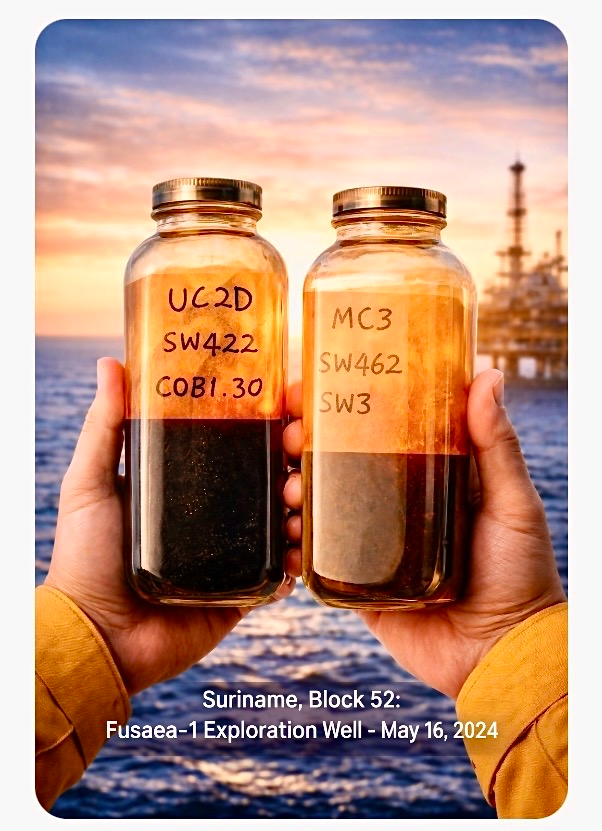
Two bottles of hydrocarbons from Fusaea-1 in Block 52 โ€” publicly released.

For the first time, for myself, Surinameโ€™s offshore Golden Lane had visible oil.


Embedded Conceptual 3D Geological Framework

The following conceptual figure illustrates the petroleum system architecture of Block 52 within the Golden Lane fairway:

3D Diagram Suriname Schematic

Conceptual 3D model: Pre-Cretaceous basement, Lower Cretaceous OAE source kitchens, Upper Cretaceous turbidite fan reservoirs, structural migration pathways, and present-day phase distribution.


1. What We See in the Fusaea-1 Image

  • Two hydrocarbon samples with density contrast
  • One darker liquid phase
  • One lighter, clearer hydrocarbon
  • Phase separation likely due to pressure drop

This visual evidence strongly indicates a light to volatile oil system or condensate-rich hydrocarbon phase.

Heavy oil is inconsistent with the appearance.


2. Basin Context and Petroleum System Logic

Source Rocks

  • Aptianโ€“Albian (OAE 1)
  • Cenomanianโ€“Turonian (OAE 2)
  • Marine Type II kerogen
  • High TOC (>3โ€“10% regionally reported)

Maturity

  • Deepwater burial >4โ€“6 km
  • Late oil window to wet gas window
  • Estimated Ro 0.9โ€“1.3%

Reservoir

  • Upper Cretaceous deepwater turbidite channels
  • Good porosity preservation under overpressure
  • High net-to-gross systems

This maturity level predicts volatile oil or condensate transition fluids โ€” precisely consistent with the Fusaea image.


3. Fluid Phase Position on the Hydrocarbon Continuum

Hydrocarbon phase evolution:

Oil โ†’ Volatile Oil โ†’ Wet Gas โ†’ Condensate โ†’ Dry Gas

The image suggests positioning near the volatile oilโ€“condensate boundary.

Likely characteristics:

  • API gravity 35โ€“50ยฐ
  • Elevated GOR
  • Solution gas flashing
  • Strong mobility

4. Ranked Fluid Type Assessment

Most Likely: Volatile oil with condensate separation

Second: High-API light oil

Third: Gas-condensate system

Unlikely: Heavy oil


5. What Is Scientifically Defensible

  • Working petroleum system confirmed
  • Light hydrocarbon class
  • Deepwater Cretaceous turbidite charge
  • Oil-prone OAE source rock effectiveness

6. Eight Core Conclusions

  1. The Golden Lane concept extends into Suriname.
  2. OAE source rocks are effective and mature.
  3. Block 52 sits near volatile oil window.
  4. Reservoir quality preserved.
  5. Fluids likely light and commercially attractive.
  6. Hybrid oilโ€“gas development plausible.
  7. Subsurface continuity with Guyana discoveries.
  8. The basin has entered its mature development phase.

7. Personal Geological Reflection

This publicly released Fusaea-1 image immediately reminded me of 1983, when I stood on the Ceuta discovery rig in the Maracaibo Basin, Venezuela, holding two bottles of light oil from what became a >3 billion barrel accumulation.

At that time I worked with Meneven, Exploration Office Campo Alegre, affiliate of PDVSA in State Zulia.

Seeing Fusaea oil brought back the same professional recognition: the moment when interpretation becomes proof.

After coining the Golden Lane concept in 2008, this is the first oil from Surinameโ€™s offshore fairway that I have seen in a picture.

Wowwwww, amazing.


Technical Annex โ€“ Scientific References

Petroleum System & Basin Modelling

  • Hunt, J.M. (1996). Petroleum Geochemistry and Geology.
  • Tissot & Welte (1984). Petroleum Formation and Occurrence.
  • Magoon & Dow (1994). The Petroleum System.
  • Peters & Cassa (1994). Applied Source Rock Geochemistry.

Oceanic Anoxic Events

  • Schlanger & Jenkyns (1976). Cretaceous Oceanic Anoxic Events.
  • Jenkyns (2010). Geochemistry of Oceanic Anoxic Events.

Deepwater Turbidites

  • Reading & Richards (1994). Turbidite Systems.
  • Posamentier & Kolla (2003). Deepwater Sandstone Depositional Systems.
  • Mutti & Normark (1987). Turbidite Models.

PVT and Phase Behaviour

  • McCain (1990). Properties of Petroleum Fluids.
  • Ahmed (2018). Reservoir Engineering Handbook.

Regional Context

  • Staatsolie Offshore Reports
  • Industry publications on Guyanaโ€“Suriname Basin discoveries
  • Peer-reviewed AAPG and SPE basin papers

Closing Perspective

The Golden Lane in Suriname is no longer only a structural hypothesis. It is now visible in fluid form.

Two bottles. One basin. A petroleum system confirmed.

This is history unfolding โ€” not in theory, but in hydrocarbon.

MCAL
MCAL
My Logo
My Logo

Tags:


Verified by MonsterInsights